
.svg)
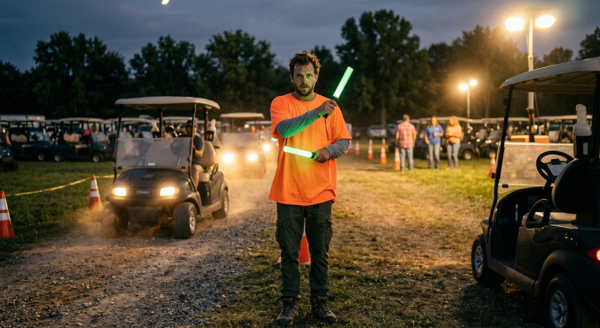
Volunteers make the day go smoothly. They take care of a lot of the prep work leading up to the event and take a lot of the extra work off your plate during it. Volunteers are the difference between an outing that feels effortless and one where you're personally sprinting between the beverage cart and the scoring table. Recruiting, training, and keeping good ones is a system, not a scramble.
"Can you help out?" is a vague, unappealing ask, and most people will find a polite way to say no. Instead, name the job: Registration Greeter, Hole 7 Marshal, Beverage Cart Runner, Raffle Ticket Closer.
A specific role gives a volunteer a mental picture of their day, a sense of ownership, and something to say yes to. It also gives you a built-in accountability structure; if the cooler at hole 12 runs dry, you know exactly whose name to text.
Write a quick role sheet before you recruit a single person. List each position, what it involves, roughly how long it takes, and what to wear or bring.
You'll fill roles faster, and you'll stop fielding the same "wait, what would I actually be doing?" question over and over.
The obvious sources, including board members, staff, a few golfer spouses get used up fast. The organizers who never scramble for volunteers pull from less obvious pools: the beneficiary charity's own volunteer list, local high school golf or business teams that need service hours, the golf course's off-duty staff, and past golfers who didn't play this year but still want to be involved.
Ask your beneficiary organization directly for names. They have the most motivated people in the building, and they already believe in the cause you're raising money for.
A quick note on timing: recruit in waves, not all at once. Send your first ask 6-8 weeks out to fill the hardest roles, then a second push 2-3 weeks out to fill the rest.
Waiting until two weeks out for everyone means you're negotiating from weakness on the roles nobody wants.
A week before the event, hold a 30-minute virtual orientation. Walk through the schedule, the role list, who's doing what, and where to go when they arrive.
Record it and send to it everyone right after. This way, if they have questions or want to refresh their memories, they have everything needed.
This single meeting eliminates most of the confused, wandering-around energy that shows up on event morning. Follow it with a quick printed cheat sheet for event day: arrival time, role, hole or station assignment, a phone number to call if something goes sideways, and the day's rough schedule.
For any role with real responsibility—hole-in-one verification, scoring, handling cash for raffle sales—pair a new volunteer with someone who's done it before. A five-minute walkthrough from a veteran prevents the kind of mistake that turns into an awkward conversation at the banquet.
Assign one person whose entire job on event day is taking care of volunteers, including checking in on them, solving problems, running replacement gear or water out to a hole. Don't let this fall on whoever's also running your registration table; that person will be too busy to notice a volunteer standing in the rain with nothing to do.
On event day, three things matter more than any pep talk: visibility, food, and rest. Give every volunteer a bright t-shirt so they're identifiable at a glance. Ideally, golfers never have to guess who's staff.
Feed them real food, not the scraps left over after the golfers eat. Build breaks into every role's schedule; two hours standing at a tee box in July without a water and a breather is how you lose a volunteer for next year.
Have a backup plan for bad weather. If a storm rolls through and your beverage cart volunteers are standing under a tree with nothing to do, that's on you, not the weather. Move them to set-up, tear-down, or the registration tent instead of leaving them stranded.
At the post-round banquet, acknowledge volunteers. Be heartfelt and sincere. At the same time, please don't list them off by name. While a nice token, by the end, even they won't care to hear their own name.
Let volunteers enjoy the parts of the outing that don't conflict with their job. For example, a plate at dinner, a raffle ticket, a drink if they'd like one. A volunteer who spends the whole day being treated like the guests' inferior won't be back; one who feels like part of the outing will.
Send a personal thank-you within 48 hours of the event. For example, a text, a call, or a handwritten note, not a mass email that goes out three weeks later. Achieve Causes' guide to thanking volunteers makes the case for keeping that message specific. Mention their exact role and something they actually did well, not a generic "thanks for coming out."
Keep a simple running list of who volunteered, what they did, and any notes about how it went. When you recruit next year, you're not starting from zero; you're inviting Dave back to hole 14 by name, and asking if he'd like to try running the raffle table this time.
A happy volunteer doesn't just come back next year. Treated well, the same person will show up for your outing for the next ten years, recruit their friends, and become part of the institutional memory that makes your event better every year it runs.
That's worth more than any single afternoon of free labor, and it's built entirely in the way you recruit, train, and treat the people wearing the volunteer t-shirt.