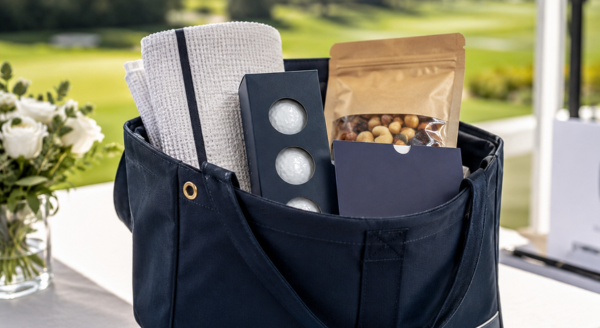
Golfers can smell a cheap swag bag before they even unzip it. A limp koozie, a plastic ball marker that will bend the first time it hits a cart path, and a golf tee that snaps on contact—players have seen this bag a hundred times, and they've stopped pretending to be excited about it.
The good news is that fixing a swag bag doesn't require a bigger budget. It requires a better formula.
The Three-Item Formula
Every swag bag that actually gets used, instead of abandoned in a cart cupholder, has three things in it. Nothing more is required.
- One high-quality branded item. A premium microfiber towel, a sleeve of real Titleist or Pro V1 balls, or a nice divot tool that doesn't bend the first time it touches turf. This is the item golfers judge the whole bag by, so don't cut corners here just to fit more stuff in.
- Something edible or drinkable. A protein bar, a bag of trail mix, a canned cocktail, or a cold bottle of water with your event logo on it. Golfers are outside for four-plus hours—food and drink is never filler, it's the item they'll actually use before the round is over.
- One sponsored item with a call to action. A "foursome for the price of three" coupon from the host course, a free-appetizer voucher from a sponsoring restaurant, or a discount code from a local pro shop. This is the item that keeps working for you after the tournament ends.
Skip any fourth or fifth item unless a sponsor is footing the bill for it separately. A bag with three things golfers actually want beats a bag with eight things they'll leave in the cart.
Timing the Handout Matters More Than You Think
Most organizers hand out the swag bag at registration, then forget about it. That's a mistake if anything in the bag is perishable or beverage-related.
- A bag sitting in a golf cart cupholder for four hours in July does no favors for a chocolate bar or a canned drink that needed to stay cold.
- If the bag includes food or drink, consider handing it out at the turn or post-round instead, when players can actually enjoy it fresh.
- If you're set on registration-table handouts, keep the perishables out of the bag and deliver them separately via the beverage cart mid-round.
Get Specific With Sponsors, Not Generic
"Sponsored by [Company]" printed across a whole bag is a weak ask, and it usually shows up as one line in your sponsorship prospectus that gets skipped. Itemized sponsorships work better for everyone.
- Sell "Towel Sponsor," "Snack Sponsor," and "Beverage Sponsor" as separate $250–$500 line items instead of one $1,000+ "swag bag sponsor" package.
- Smaller, specific asks are easier for a sponsor to say yes to, and you can report back exactly what their name was attached to—which matters when you ask them to renew next year.
- If a single sponsor wants to cover the whole bag, let them, but always give them the option to sponsor just one piece. You'll pick up sponsors who wouldn't have written the bigger check.
Order Early or Pay the Rush Fee
The single most common swag bag mistake isn't the item selection—it's the timeline. Branded merchandise vendors run 8–12 week production windows for anything customized, and rush orders inside that window routinely cost 30–50% more.
- Lock in your item list and place vendor orders at least two months out from the event.
- Always request a physical proof or sample before the full order ships. A logo printed off-center or in the wrong color is far more common than organizers expect, and there's no fixing it once 150 units arrive.
- If a sponsor is providing branded product directly, get their production timeline in writing early—sponsors run on their own schedules and won't prioritize your deadline unless you ask them to.
Fold the Cost Into the Ticket Price
Swag bags aren't free, and pretending otherwise just means the cost quietly eats into your fundraising total. There are two clean ways to handle it.
- Build it into registration. If your bag costs $20 per golfer, add that into your ticket price calculation the same way you'd account for greens fees or catering minimums. As Imprint Golf's tournament gift buyer's guide points out, most charity bags land in the $15–$35-per-golfer range, so build that number in before you set your entry fee.
- Get a swag bag sponsor. A single sponsor covering the entire bag cost is one of the easiest sells in your sponsorship deck—it's a fixed, predictable cost with guaranteed visibility in every player's hands, which is an easier pitch than a hole sponsorship with less certain engagement.
Run the Cart Test
Before you finalize next year's bag, do one simple thing: walk the cart corral after the round and look at what got left behind. As Stripebird's guide to tournament gifts points out, the items still sitting in cupholders and seat pockets are the ones to cut next year, no matter how cheap they were to buy.
- Anything golfers actually want, they take with them. Anything they don't, you'll find scattered across the cart barn.
- Use what you find as next year's item list, not this year's. A bag that gets emptier every year is a bag that's actually working.
A great swag bag isn't about volume or how many logos you can cram into one tote. It's three well-chosen items, handed out at the right moment, paid for on purpose instead of by accident—and sponsors who know exactly what they're getting for their money.

.svg)