
.svg)
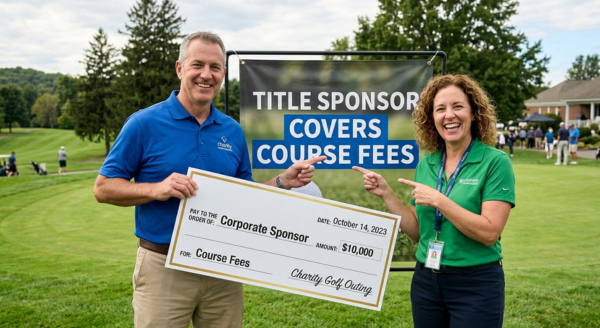
The goal isn't just to raise money. The goal is to raise money where every dollar from golfer registration goes directly to your cause, because your operating costs have already been covered by someone else.
A zero-cost outing is exactly that: an event where sponsorships cover every expense category before registration opens. It's an advanced model that takes a few years to build toward, but once you've done it, the math changes completely.
The framework is simpler than most committees realize. Four sponsorships, each tied to a specific expense line, eliminate the major costs of running the event.
A Title Sponsor covers the golf course fees. This is your largest cost and typically runs between $10,000 and $30,000 depending on your venue. The Title Sponsor gets naming rights to the event, logo placement on everything, and the most visible presence on the course. At this level, you're targeting companies who see the event as a marketing and relationship vehicle, not just a charitable contribution.
A Banquet Sponsor covers food and beverage. This eliminates your second-largest expense category and typically includes dinner, cocktails, and any on-course refreshments not handled by the cart sponsor. In exchange, the Banquet Sponsor gets prominent display at the post-round reception and an opportunity to briefly address the room.
A Cart Sponsor covers cart rentals for the full field. This is a mid-tier sponsorship that typically runs between $2,000 and $5,000 and gives the sponsor logo placement on every cart for the entire day. Cart signage gets more impressions than almost any other placement at the event, because every golfer rides one for four to five hours.
A Swag Sponsor covers the golfer gift bags and branded merchandise. Nonprofit Learning Lab's planning guide for events with no upfront costs highlights swag sponsorship as one of the easiest entry points for companies who want visibility without a large commitment, because the cost is tangible and the exposure is direct.
Most events don't arrive at full zero-cost in year one. The more realistic path is to eliminate one expense category per year as your sponsor relationships deepen.
Start with the Cart Sponsor. Cart logos are visible all day to every golfer and represent concrete, easy-to-photograph value. Once that model works, build toward covering food and then golf course fees. By year three or four of a consistent event, you have the track record and relationships to make a compelling case for a Title Sponsorship at a level that covers your largest cost.
Each sponsorship package needs a clear, stated value: what the sponsor gets, where their logo appears, and how many people will see it. The less guesswork a sponsor has to do about their return, the easier the conversation is. DoJiggy's guide to how charity golf tournaments make money notes that sponsorship packages with specific deliverables consistently close at higher rates than packages with vague "exposure" language.
Attach post-event reports to each sponsorship. Show them a photo of the branded carts, a screenshot of their logo on the event website, an attendance count, and social reach numbers. Sponsors who see concrete evidence of their value renew, upgrade, and refer other companies to your event.
When your costs are fully covered, registration fees become something rare in the nonprofit world: pure, predictable revenue. At $150 per golfer with a 120-person field, that's $18,000 going directly to your cause before a single auction item is sold or a single raffle ticket is purchased.
That shift in how registration revenue works is what makes the zero-cost model worth building toward.