
.svg)
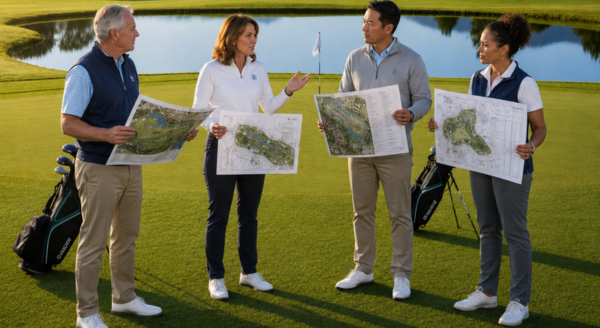
Most first-time charity golf organizers underestimate one thing: how quickly “I’ve got a few people helping me” turns into “I am somehow doing everything myself.” A well-built committee is what separates a smooth event from a six-month stress spiral. And it starts long before anyone sets foot on a course.
You don’t need a large committee. You need the right five seats filled, each covering a distinct area with no overlap. The cleaner the separation, the less that falls through the cracks:
Shared ownership sounds collaborative. In practice, it means two people assume the other is handling it. Assign one name to each area, no exceptions.
Most organizers recruit their most enthusiastic volunteers. That’s understandable, and also usually a mistake. The person who can actually close sponsors isn't necessarily your most enthusiastic volunteer, it's the one with access.
The best Sponsorship Chair is someone with a contact list full of local business owners who owe them a favor.
The best Golfer Recruitment Chair personally knows 30–40 people who golf and will actually pick up when called.
When evaluating candidates, ask one question: “Does this person have access to people I can’t reach on my own?” If the answer is no, keep looking.
A strong network only matters if the person actually works it. It’s 100% worth the extra time to find people who bring both network and follow-through to the table.
Telling someone "you're on sponsors" and leaving it there is how you end up having a very uncomfortable conversation three months later. Write a one-page role summary for every committee member:
Twenty minutes upfront prevents hours of cleanup later. It also stops the accidental overlap where two well-intentioned people are working the same sponsor contact without knowing it.
Monthly meetings from nine months out is a reasonable baseline. Shift to every two weeks at the three-month mark, that’s when decisions pile up and small problems become expensive if they wait.
Two meetings most committees skip, and shouldn’t:
The easiest time to lock in your committee for next year is right after the event ends. Everyone is exhausted, proud, and still in it. A casual “you in for next year?” during the post-round dinner lands very differently than the same question six months later when people have long since moved on.
In our experience, committees that delay re-recruitment lose 40–60% of their members to other obligations. The ones that lock in commitments the same night return more experienced, more motivated, and ready to build on what they created.
Volunteers turn over every year or two. Your systems shouldn’t. One of the most common reasons second-year events feel harder than first-year events is that the organizer inherited nothing and is rebuilding from scratch.
Start a shared folder from day one: vendor contacts and contract terms, a sponsor tracker, your master timeline, and debrief notes from each year.
When a committee member doesn’t return, the folder stays. That’s how institutional knowledge survives turnover, and how each year gets meaningfully better than the one before.
The committee you build is the foundation everything else sits on. Get the roles right, recruit people with real access and proven follow-through, give them clear written ownership, and keep communication structured. Sponsorships, golfer recruitment, day-of logistics, all of it gets easier when the team underneath it is solid.