
.svg)
A while back we covered how to get non-golfers involved in your outing, which focused mostly on jobs they could do and ways to get active. In this post, we're live into other ways to engage them in more of the fun.
Non-golfers don't attend charity golf outings because nobody explicitly invites them. It's not that they don't want to support the cause or spend a day at a golf club. It's that every piece of communication your event produces, the registration page, the email, the social posts,is aimed at golfers. Everyone else self-selects out before they even ask the question.
A dedicated non-golfer ticket on your registration page is a signal. It says: you are welcome here, there is something for you to do, and your presence matters to us. That signal alone will bring people who would never otherwise show up.
Price a "Games Only" or "Banquet Only" ticket at the cost of dinner plus a modest add-on, typically $50–$85 depending on your market and dinner budget. Non-golfer ticket holders can participate in the silent auction, buy raffle tickets, and attend the dinner and awards. They just don't take up a golf slot.
From a revenue standpoint, the math is straightforward. If your outing has 144 golfers, and each golfer has a spouse or guest who would attend for $75, that's potentially significant additional revenue with no additional golf cost and no additional course coordination.
A banquet ticket gets people in the door. A parallel event gives them something to do while the round is happening. The best version of this is an activity that runs in the clubhouse or on the practice facility for three to four hours while golfers are on the course, something social, low-pressure, and self-contained.
Options that work well in practice:
A Sip & Paint session costs almost nothing to run when a local artist volunteers or is compensated with a small flat fee. Attendees pay $30–$50 to participate, get a few hours of structured activity, and leave with a painting. It runs itself once it starts.
More importantly, it keeps non-golfers together in one place where they socialize. By the time golfers come in off the 18th hole, the non-golfer group has been together for three hours and is in a genuinely good mood. That energy blends well into the dinner and auction portion of the evening.
Don't call the parallel event the "non-golfer event." That framing makes it sound like a consolation prize for people who couldn't get a tee time. Give it a name that makes it sound like something someone would choose to attend.
"The Clubhouse Social." "The 19th Hole Lounge." Whatever fits your organization's voice. The goal is for the activity to feel like a parallel draw, not a backstage area for people who got left out.
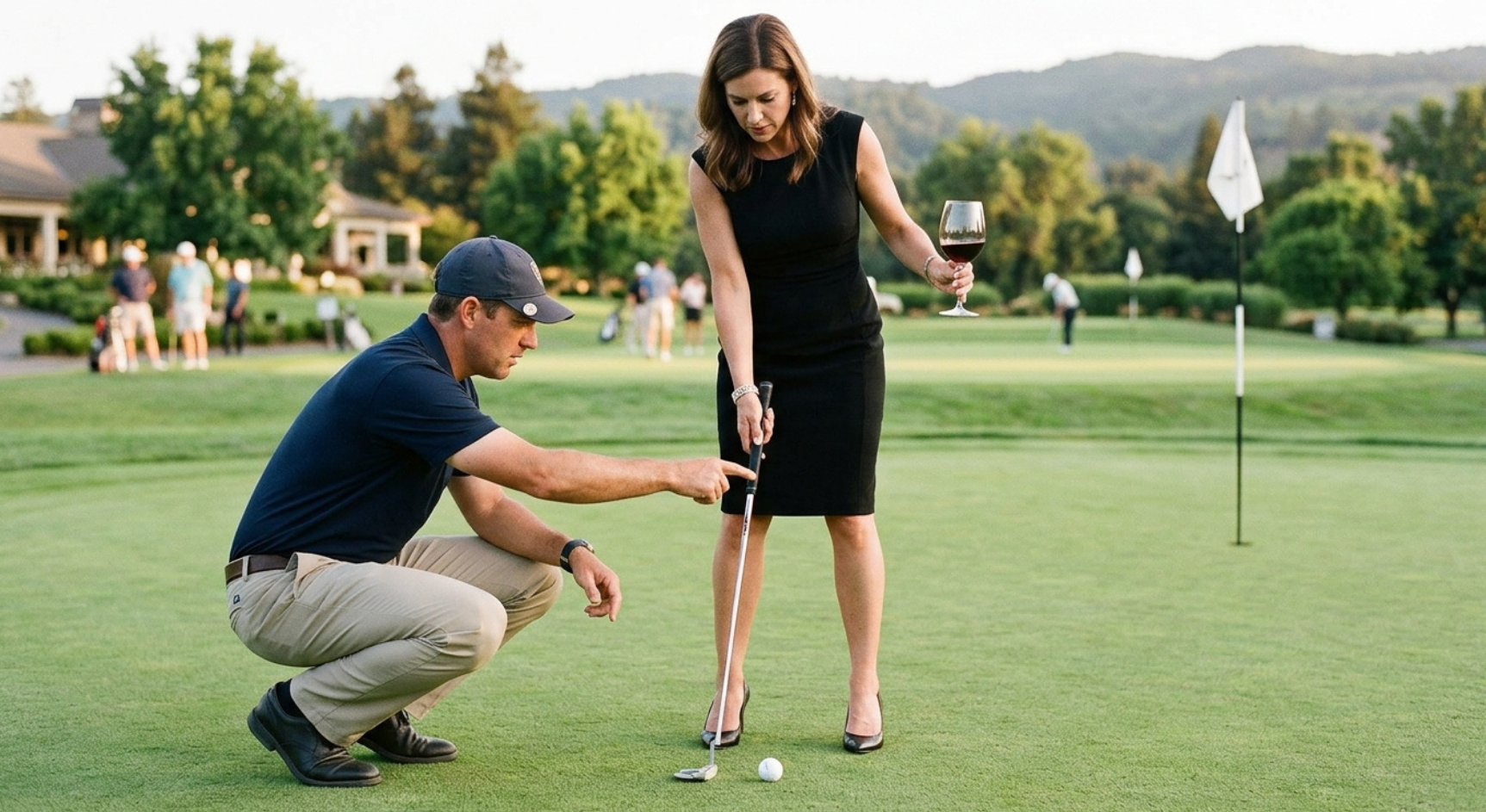
If you want a parallel activity that costs essentially nothing, set up a putting contest on the practice green. Charge $5 per attempt, offer a prize for anyone who sinks a 20-foot putt, and let it run all day as a drop-in activity. Non-golfers can try it, golfers can swing by after finishing their round, and it generates a small but consistent revenue stream with one volunteer and a handful of balls. You may also consider setting up a non-golfer division and prize.
It also introduces non-golfers to the basics of the game in a no-stakes way. Some of them will want to try an actual round next year. That's a long-term benefit that's hard to quantify but easy to appreciate.
If your course has a driving range or a practice facility, a "Sip & Swing" station can offer non-golfers a genuine introduction from the course pro in a social setting. This works especially well for organizations with a younger donor base or when the event is oriented toward relationship-building as much as fundraising.
The pro volunteers or charges a flat fee, the beverage cost is covered by a sponsor or built into the ticket price, and you've created an experience non-golfers can actually talk about afterward.
You're running two events on one venue on one day. Your footprint doesn't grow, your course coordination doesn't change, but your audience doubles. Golfers bring their partners. Board members bring spouses. Sponsors bring employees who don't golf. All of those people spend money at your auction, buy raffle tickets, and become part of your donor base.
The charity golf outing model is built around a single assumption: the people who care about your cause also happen to golf. Breaking that assumption even slightly, opens the event to a much larger group of people who care about your cause and would show up if you made it clear they were welcome.
At the end of the event, ask non-golfer attendees directly: what would make you come back? What did you enjoy? What felt like an afterthought? That feedback costs nothing to collect and is worth more than any post-event survey you send to golfers.
The outing that figures out how to serve both audiences well doesn't just have a better event — it has a larger and more sustainable donor base going into the following year.