
.svg)
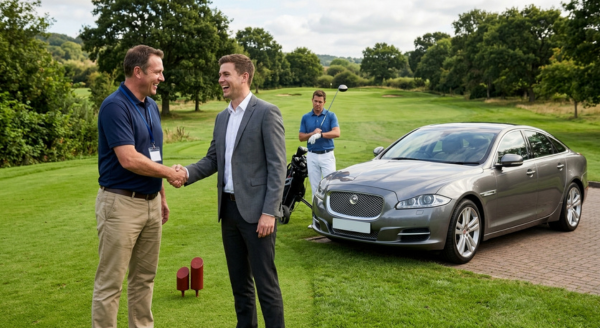
A brand-new car parked next to the 18th tee. A sign that reads "Make a Hole-in-One, Drive it Home." Every golfer walking up to that tee thinking, "What if today's the day I finally win a Ford Fiesta."
That's the energy a hole-in-one car prize brings to your event — and most organizers assume it's out of reach. It's not. You just need to ask the right person for the right thing.
Here's the part most organizers miss: you don't ask the dealership to donate a car. That's a $40,000 ask, and the answer is almost always no.
What you ask them to pay is the hole-in-one insurance premium — typically $500 to $1,000 depending on the value of the vehicle and the number of players. The insurance company covers the prize if someone actually makes the shot. The dealership's out-of-pocket is a fraction of the vehicle's value, and the car never leaves their inventory unless a winner drives it away.
That reframe changes everything. You're no longer pitching a major donation. You're pitching a manageable marketing investment with a clear upside for them.
A local dealership sponsoring your hole-in-one prize isn't doing it out of the goodness of their heart — they're doing it because the math works.
They get to park a vehicles (or more) on-site: one at the prize hole and maybe one near registration, one or two staged near the clubhouse. Every golfer at your event walks past those cars, sits with those cars, takes photos near those cars. For a luxury brand trying to put a model in front of high-income decision-makers, that's a pretty good afternoon.
Golfers index well for dealerships. Hole In One International's marketing data shows that golfers are a high-value demographic with above-average household incomes — exactly the buyer profile a luxury or near-luxury dealership wants to reach. The on-site presence plus the lead capture opportunity is a genuine marketing value proposition, not a charity ask.
Most dealerships that have done this before will already understand the model. For those who haven't, your job is to explain it clearly and take as much friction off the table as possible.
Have the insurance quote ready. Have a one-page sponsorship summary. Know exactly where their vehicles will be parked and for how long. The more prepared you are, the faster the conversation moves.
Not every dealership will say yes. Some don't have the budget cycle available, some have corporate policies that limit local marketing decisions. Ask three or four, expect one or two to come through. The ones that do will almost always want to come back next year — because if they worked it right, they drove actual business from it.